
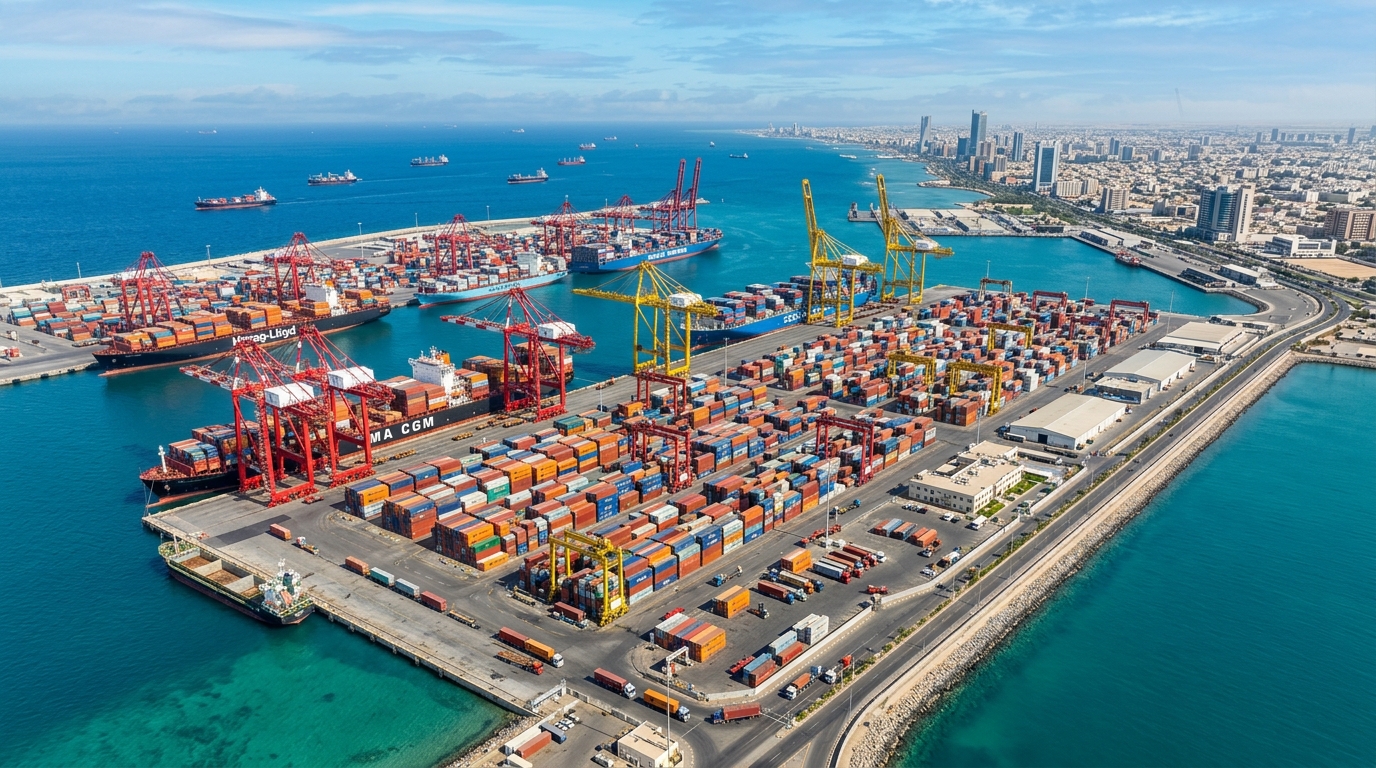
Introduction: The Expanding India-Saudi Arabia Trade Corridor
Bilateral commercial relations between the Kingdom of Saudi Arabia and the Republic of India have expanded rapidly, driven by the Kingdom’s Vision 2030 modernization agenda and India’s robust manufacturing and agricultural supply chains. For Saudi enterprises—ranging from major supermarket chains and wholesale food distributors to contracting firms and hospitality conglomerates—sourcing directly from Indian production clusters delivers unmatched cost efficiency and supply resilience.
However, executing successful cross-border B2B procurement requires a structured understanding of key procedural pillars:
1. **Identifying Genuine Production Hubs** 2. **Navigating Regulatory Compliance (SFDA and SABER)** 3. **Optimizing Ocean Logistics across Jeddah and Dammam** 4. **Structuring Secure International Payment Milestones**
---
1. Mapping India's Geographic Production Clusters
India’s industrial and agricultural output is heavily specialized by geography. Working with intermediaries who do not understand these clusters often introduces unnecessary margins and delayed communication.
- **Basmati Rice**: The agrarian northern plains of Punjab, Haryana, and Western Uttar Pradesh house the world's most sophisticated Sortex-milling infrastructure.
- **Fresh Cavendish Bananas & Onions**: Maharashtra (Jalgaon for bananas, Nashik for red onions) and Gujarat represent the primary export pack-houses equipped with cold-chain pre-cooling infrastructure.
- **Whole & Ground Spices**: Unjha in Gujarat commands the world's cumin trade; Guntur in Andhra Pradesh is the epicenter of dry red chili; Kerala and Tamil Nadu dominate cardamom and high-curcumin turmeric.
- **Ceramic & Porcelain Tiles**: Morbi in Gujarat accounts for more than 70% of India's ceramic production, operating state-of-the-art Italian Sacmi pressing and digital glazing lines.
- **Textiles, Workwear & Hospitality Linens**: Surat and Ahmedabad (Gujarat) for synthetic and woven fabrics; Tirupur (Tamil Nadu) for premium cotton knitwear and institutional linens.
---
2. Regulatory Compliance: SFDA and SABER Requirements
Saudi customs clearance is strictly governed by digital single-window systems. Ensuring your Indian supplier prepares documentation compliant with Saudi regulatory bodies is the single most critical factor in avoiding port demurrage.
For Food & Agricultural Products (SFDA) - **Facility Registration**: Indian food processors and exporters should be registered on the SFDA electronic system. - **Arabic Bilingual Labeling**: Pre-packaged food cartons and bags must feature legible Arabic product naming, net weight, country of origin (صنع في الهند), production and expiry dates in Day/Month/Year format, and importer details. - **Phytosanitary & Lab Test Certificates**: Fresh produce and grains require official phytosanitary clearance certifying freedom from quarantine pests, alongside laboratory test reports confirming pesticide residues remain within SFDA maximum residue limits (MRLs).
For Building Materials, Tiles & Industrial Supplies (SABER / SASO) - **SABER Platform Registration**: The Saudi importer must initiate the product request on the SABER portal. - **Certificate of Conformity (CoC)**: Products must be assessed by an approved Conformity Assessment Body (CAB) to obtain both the Product Certificate of Conformity (PCoC) and Shipment Certificate of Conformity (SCoC).
---
3. Maritime Shipping Logistics: Ports, Transit Times & Incoterms
Indian containerized freight destined for Saudi Arabia departs primarily from two premier western maritime gateways: - **Mundra Port (Gujarat)**: Highly automated, ideal for ceramic tiles from Morbi, agricultural grains from north India, and spices from Gujarat. - **Jawaharlal Nehru Port Trust / Nhava Sheva (JNPT Mumbai)**: Premier container gateway for fresh fruits, vegetables, textiles, and western India manufacturing.
Transit Times to Saudi Seaports - **To King Abdulaziz Port, Dammam**: Typically **5 to 8 days** via direct Arabian Gulf feeder and mainline routes. - **To Jeddah Islamic Port (Red Sea)**: Approximately **8 to 12 days**, navigating through the Gulf of Aden and Red Sea. - **To Riyadh**: Goods typically discharge at Dammam and are railed directly to Riyadh Dry Port within 48 to 72 hours under bonded transit.
Recommended Incoterms for Saudi Buyers - **CIF (Cost, Insurance & Freight)**: Highly recommended for buyers seeking predictable landed costs without managing maritime freight contracts independently. - **FOB (Free on Board)**: Favored by large Saudi trading houses with existing annual carrier freight contracts.
---
4. Payment Security & Mitigating Commercial Risks
To ensure financial safety for both parties: - **Confirmed Irrevocable Letter of Credit (LC at Sight)**: The gold standard for initial multi-container contracts. Payment is released by the Saudi bank only after verification that all original shipping documents and inspection certificates strictly match the LC terms. - **Telegraphic Transfer (TT)**: Typical structure involves a 30% advance deposit upon purchase order confirmation to begin milling/production, with the remaining 70% balance payable against non-negotiable Bill of Lading copies and SGS pre-shipment inspection certificates.
---
Conclusion: Partnering with Flownware Export
Flownware Export eliminates the uncertainty of overseas procurement by acting as your dedicated sourcing and export coordination liaison in India. From validating manufacturer licenses to supervising container stuffing and dispatching compliance paperwork, we ensure your bulk shipments arrive on schedule and in pristine condition.